
Leather Coats Manufacturer for Private Label and Apparel Brands
Vixen Leather manufactures leather coats for brands and private-label buyers developing leather outerwear collections. Each project is defined by its intended silhouette, selected leather, finished dimensions and construction requirements. From shorter structured coats to longer designs, the manufacturing process must account for how the garment hangs, distributes its weight and maintains its shape when worn.
Leather coats present specific construction challenges because their length and panel dimensions influence the way the garment moves. The relationship between the shoulders, chest, waist, hem and front opening affects the overall balance. Leather thickness, lining construction and fastening details can further change how the finished coat falls.
For commercial production, these characteristics need to be considered during development rather than corrected only after assembly.
Coat Designs for Different Collection Requirements
A coat’s silhouette determines many of its manufacturing requirements. A tailored design calls for controlled shaping and carefully aligned front edges, while a relaxed or oversized coat relies on different proportions and ease.
Vixen Leather can review project requirements for different designs
These categories describe possible design directions. The actual product range established according to the buyer’s brief.

Men’s leather coats
Crafted for durability and style, suitable for casual, formal, and winter wear collections.

Women’s leather coats
Designed with modern cuts, premium finishes, and comfort-focused linings for fashion-forward brands.

Long leather trench coats
Classic and contemporary trench styles offering elegance, weather protection, and long-lasting wear.

Shearling & fur-lined leather coats
Premium coats offering superior warmth, luxury appeal, and high-end market value.

leather Duster
Long-length coats designed for durability, protection, and a bold, timeless look.

Classic & modern designs Coats
From traditional silhouettes to trend-driven styles, tailored to meet diverse market needs.
Longer Panels Require Careful Pattern Planning
The pattern for a leather coat must account for the relationship between its upper body and lower sections. Small differences in length, width or panel shape can become more noticeable on a long garment, particularly when the coat is viewed from the front or back.
Pattern development should establish the finished length, chest and waist dimensions, shoulder proportions, sleeve length, hem width and front overlap. Where the design includes a shaped waist, side panels, back vents or a belt, these details must be coordinated with the overall silhouette.
Front and back balance is especially important. The coat should maintain its intended position without unwanted pulling or distortion around the shoulders, armholes or lower body. The selected leather and lining must also be considered because their thickness and flexibility can influence how the panels hang.
For B2B orders, measurement points and tolerances are documented clearly so that the approved sample can serve as a reliable reference for production.
Selecting Leather for a Coat's Intended Structure
Material selection affects the appearance, movement and weight of a leather coat. A firmer leather may help maintain a defined outline, while a more flexible material may create a softer fall. The appropriate choice depends on the design, panel dimensions, finishing requirements and intended wear.
Long coats can also involve substantial surface areas, making hide selection and cutting yield important parts of material planning. Grain character, thickness, colour variation and usable surface area should be considered when allocating leather to the pattern pieces. Large back and front panels may have different material requirements from smaller collars, facings, cuffs or pocket components.
For buyers evaluating cost, leather consumption should be estimated against the actual pattern, selected material and size range. A single allowance cannot accurately represent every coat design because length, panel layout, size distribution and natural hide variation all influence yield.
The material specification should identify the agreed leather type, colour and finish, together with any relevant requirements for thickness or surface appearance. These details help reduce ambiguity when preparing samples and planning a commercial order.
Front Construction, Collars and Fastening Details
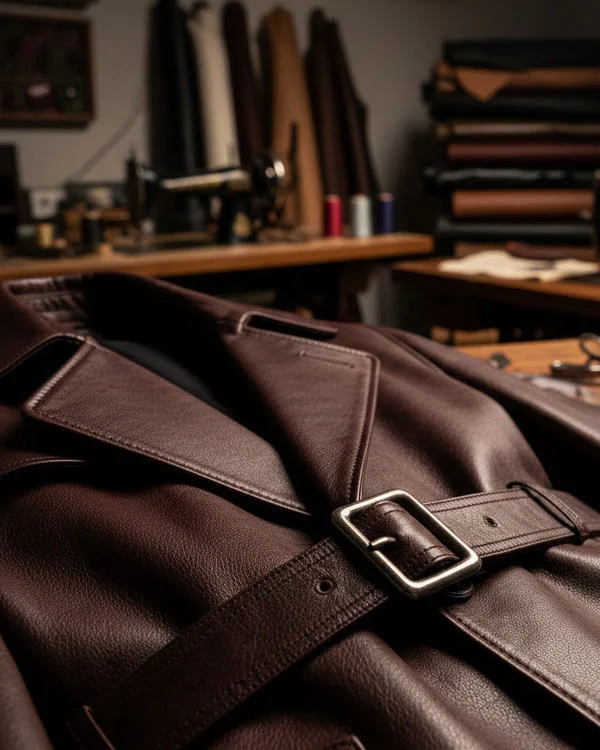
The front of a leather coat has a major influence on its appearance and function. Button fronts, concealed closures, exposed zippers, double-breasted arrangements and belted designs each require different pattern relationships and component placement.
Collars and lapels also require attention to shape and proportion. Their width, length, roll and relationship to the neckline should match the design reference. The front edges must align with the intended closure, particularly where overlapping panels or shaped lapels are involved.
Pockets should be positioned in relation to the coat’s finished measurements and panel lines. Depending on the design, the specification may need to define pocket opening dimensions, placement, bag construction, flap shape and any reinforcement requirements.
For production planning, these features should be described in the technical package or approved sample. Details that appear minor in a sketch can affect pattern development, component sourcing, assembly time and final costing.
Lining, Internal Space and Garment Weight
The lining is an important part of coat construction because it must work with the outer shell rather than restrict it. Its pattern and attachment should accommodate the shape of the coat, the intended ease and the movement required at the shoulders and sleeves.
Longer designs may also need careful consideration of how the lining hangs through the body. Poorly coordinated dimensions can contribute to pulling, twisting or uneven folds. The relationship between the lining, facings, vents and lower edge should therefore be reviewed during sample development.
Finished weight is another consideration for buyers, particularly when comparing different leather specifications or planning a collection with several lengths. Weight depends on the leather’s area and thickness, lining, hardware and other components. It should be estimated from the proposed specification and confirmed through a representative sample or measured finished garment where required.
If a target weight is commercially important, it should be included in the brief as a requirement to assess rather than treated as a fixed result independent of the material and design.
Sample Development Before Bulk Production
A physical sample allows the buyer to evaluate how the coat’s length, proportions and materials work together. This is particularly important for designs where drape, front balance, collar shape or the relationship between the body and sleeves cannot be judged fully from drawings alone.
A sample review can assess:
- Finished body length, chest, waist and hem measurements.
- Front and back balance when the coat is worn.
- Shoulder fit, sleeve length and freedom of movement.
- Collar and lapel shape, including front-edge alignment.
- Pocket dimensions and placement.
- Lining behaviour and internal finishing.
- Fastener operation and the appearance of visible components.
- Overall leather appearance, stitching and workmanship.
Buyer comments should be linked to specific measurements, construction details or visual references wherever possible. If the leather, lining, pattern or components change during development, the implications for fit, weight, appearance and costing should be reviewed before approval.
The approved sample and final specifications should establish the reference for the intended production order.
Size Grading and Length Consistency
Leather coats often require careful grading because changes in body size affect more than the garment’s width. Shoulder dimensions, sleeve proportions, armhole depth, coat length, hem circumference and the placement of design features must follow the agreed size rules.
A grading plan should define the base size and the measurements that change between sizes. Buyers with established fit blocks can supply their own specifications, while projects requiring development support should establish grading responsibilities before sampling is finalized.
Long garments also benefit from clear hem and panel-length tolerances. Consistent measurement methods help the buyer assess samples and production garments against the same standard.


Production Specifications for Wholesale and Private Label Orders
A successful B2B order depends on having an agreed definition of the finished product. For leather coats, this should cover the outer material, lining, measurements, construction details, closure components, pocket configuration, labels, packaging and inspection criteria.
Quality checks should reflect the coat’s design. Relevant points may include panel alignment, symmetry where required, seam workmanship, front-edge alignment, hem level, collar shape, lining attachment and correct component placement. Visible leather condition and acceptable shade or grain variation should also be defined in advance.
Because natural leather varies, buyers should establish which surface characteristics are acceptable and which conditions constitute a defect. Clear acceptance criteria help avoid disputes based on expectations that were not part of the original specification.
For repeat orders, maintaining an approved sample, measurement chart, material reference and record of confirmed revisions helps preserve continuity between the development stage and subsequent production.
Costing and Material Requirements
The cost of a leather coat depends on the complete specification. Garment length, leather consumption, pattern complexity, lining, pocket construction, collar design, closures, hardware and finishing can all influence the manufacturing cost.
Longer coats may require more leather and larger pattern pieces, but actual consumption depends on the design, hide characteristics and cutting arrangement. Material estimates should therefore be prepared against the relevant pattern and proposed size breakdown.
For an initial quotation, buyers should provide the coat design or technical pack, target quantity, size range, preferred leather, lining details and component requirements. Sample charges, development revisions, production pricing, lead times, payment terms and shipping arrangements should be confirmed in the project quotation rather than assumed from a general product description.
OEM Leather Coat Manufacturing for Brands
Vixen Leather works with buyers developing leather coats for their own labels and apparel collections, subject to the project’s technical and manufacturing requirements. Projects may begin with a finished technical package, an existing reference garment or a design that needs further clarification before sampling.
Private-label details can include brand labels, size and care labels, hangtags and packaging requirements. Buyers should provide artwork, dimensions, placement instructions and any relevant packaging specifications for review before approval.
For OEM projects intended for repeat production, clear documentation is especially valuable. The approved sample, material details, construction instructions and measurement standards give the buyer and manufacturer a common reference for the order.
Discuss Your Leather Coat Manufacturing Requirements
If you are sourcing a leather coat manufacturer for a brand collection, wholesale programme or private-label range, share your design references and available specifications with Vixen Leather.
Include the intended coat style, approximate quantity, size range, preferred leather, lining requirements and any target dimensions or finished-weight considerations. This information helps establish the scope of development and the details required for sampling and production planning.
Contact Vixen Leather to discuss your leather coat design, sampling requirements and manufacturing specification.