
Custom Leather Pants Manufacturer for Global Brands
Leather pants combine distinctive leather aesthetics with garment construction that requires particular attention to fit, movement, and panel shaping. From classic leather trousers and slim silhouettes to motorcycle-inspired pants and contemporary fashion designs, leather pants can be developed for different markets and apparel collections. Vixen Leather, based in Sialkot, Pakistan, manufactures leather pants for brands, retailers, wholesalers, and businesses seeking professionally produced leather apparel.
Leather pants require a different manufacturing approach from many other leather garments because the garment needs to accommodate body movement while maintaining its intended shape. Leather selection, pattern development, panel placement, waist construction, closures, pockets, stitching, lining, and finishing all contribute to the final product. Vixen Leather considers these elements according to the requirements of each leather trouser design.
Leather Trousers Created Around Your Requirements
A commercially successful pair of leather pants begins with a clear understanding of the intended design. Buyers may require particular measurements, leg shapes, waist constructions, pocket arrangements, colours, leather characteristics, hardware, or finishing details depending on their target customers.
Vixen Leather works around defined product specifications when manufacturing leather pants. This allows the garment’s construction to be established according to the buyer’s requirements instead of relying on a generic trouser pattern that may not correspond with the intended collection.
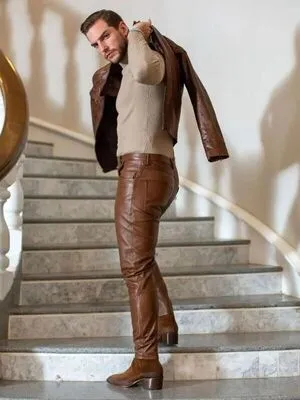
Men’s Leather Pants
Designed for casual wear, fashion collections, and motorcycle use, offering durability, comfort, and versatile styling.

Women’s Leather Pants
Crafted with fitted cuts and high-fashion silhouettes, focusing on style, comfort, and premium finishing.

Biker & Motorcycle Leather Pants
Manufactured with reinforced panels, protective stitching, and heavy-duty leather for enhanced safety and long-term performance.

Slim-Fit & Stretch Leather Pants
Developed using flexible leather options for modern fashion brands seeking comfort with a tailored appearance.

Classic Leather Trousers
Timeless designs made with clean cuts and durable construction, ideal for long-term retail collections.

Workwear Leather Pants
Manufactured using heavy-duty leather and reinforced construction, these pants used for industrial use, security uniforms and workwear.
OEM and Private Label Leather Pants Manufacturing
Vixen Leather works with buyers developing leather trousers for their own brands and apparel collections, subject to the design and manufacturing requirements of each project.
Projects may begin with a complete technical package or require further discussion to clarify fit, materials, construction and branding. Private-label specifications may include brand labels, size labels, care labels, hangtags and packaging requirements.
For OEM orders, clear documentation helps connect the approved design with the manufacturing specification. The final reference should establish the material, measurements, grading rules, construction details and buyer-approved finishing requirements.
This information is particularly important for repeat orders, where the buyer expects a previously approved style to be reproduced against the same documented standard.
Selecting Leather for the Right Trouser Structure
Leather choice affects how trousers fit, hang and respond to movement. Thickness, flexibility, grain character and surface finish influence both the visual appearance and the construction approach.
A firmer leather can create a more structured silhouette, while a softer material may follow the leg more naturally. However, flexibility alone does not determine comfort. The pattern must provide suitable ease, and the construction needs to accommodate the intended range of movement.
Buyers should specify their preferred leather type, colour, finish and any relevant thickness requirements. Where material selection remains open, samples or material references can help establish the intended appearance before the trouser pattern is finalized.
Leather also varies in usable surface area and natural characteristics. Cutting plans must account for the size and shape of pattern pieces, visible surface variation and the need to maintain a consistent appearance across corresponding panels.
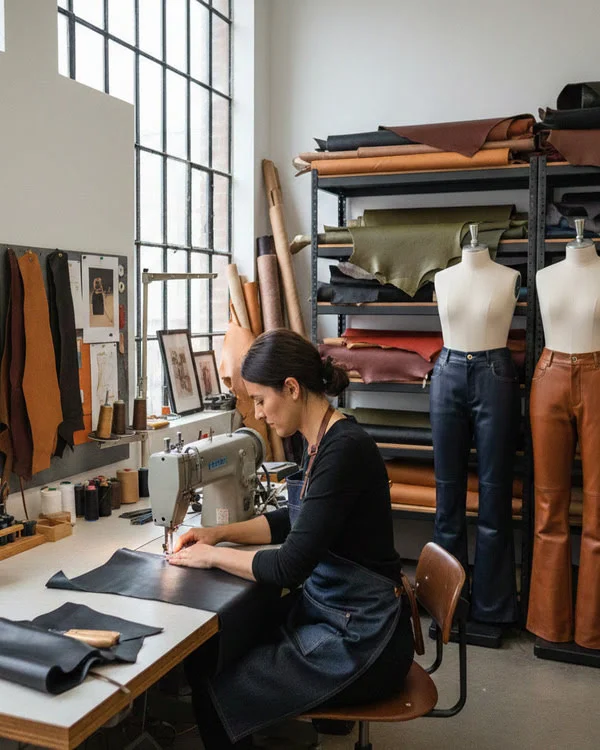
The Pattern Areas That Determine Fit
Leather pants depend on the relationship between several connected measurements. Changing one area can affect the fit elsewhere, so pattern development should be assessed as a complete garment.
Waist and rise
The waist measurement, waistband construction and front and back rise determine where the trousers sit on the body. The rise must be compatible with the intended fit and should be evaluated alongside the waist and seat measurements.
Thigh and knee
Thigh circumference and knee width determine how the garment fits through the upper and middle leg. These measurements need to work with the rise and leg shape rather than being adjusted independently.
Inseam, outseam and leg opening
Leg length, side-seam length and hem circumference establish the finished silhouette. The intended footwear and styling may also influence the required length and opening dimensions.
Seat and crotch curve
The seat shape and crotch curve influence comfort and the way the garment fits when sitting or bending. Insufficient room can create pulling, while excessive ease may produce unwanted folds. The correct shape depends on the design, body measurements and intended fit.
Cutting Efficiency and Leather Consumption
Material consumption is an important commercial consideration when costing leather trousers. The amount required depends on the size range, leg length, pattern width, number of panels, pocket construction and characteristics of the selected hides.
Large front and back leg pieces can influence cutting yield significantly. Waistbands, pocket components, belt loops, facings and smaller reinforcement pieces add further material requirements. Natural marks, grain variation and differences in usable hide area also affect how pieces can be arranged.
For accurate costing, leather consumption should be estimated against the actual pattern and proposed size breakdown. A single allowance per pair may not be appropriate across different fits, sizes or leather specifications.
Buyers planning repeat orders should also establish how material variation will be handled and what level of consistency is expected across the finished collection.
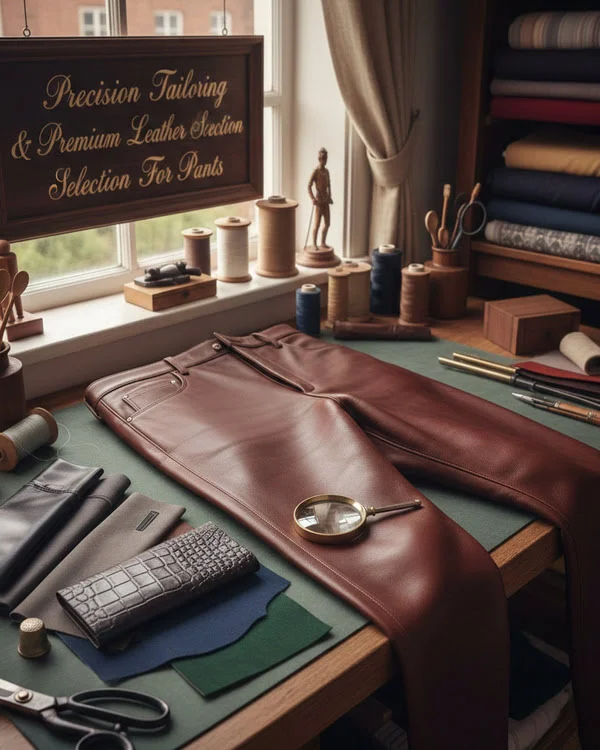
Seam Construction and Areas Subject to Stress
Leather trousers experience repeated movement and tension around the seat, crotch, inner thigh, knees and waistband. These areas deserve attention during pattern development and construction planning.
Seam type, stitch placement, seam allowance and the number of joined layers influence the finished result. The construction should suit the selected leather thickness and the demands of the particular design. Areas where multiple seams intersect may require additional planning to manage bulk and maintain a clean appearance.
Reinforcement, where specified, should be appropriate to the garment’s intended use and construction. It should not be assumed that every leather trouser requires the same reinforcement arrangement.
During sample evaluation, buyers should review the fit and appearance of these areas and confirm that the approved construction matches their requirements. Any performance or protective claim must be supported by suitable testing rather than inferred from the use of leather alone.
Waistbands, Closures and Pocket Details
The waistband affects both fit and the way the trousers sit at the waist. Its finished dimensions, attachment, fastening arrangement and relationship to the front rise should be defined in the specification.
Depending on the design, the closure may include a zipper, button, snap or another fastening system. Component dimensions and placement need to correspond with the pattern and the intended front overlap. Belt loops, if included, should be positioned consistently and sized for the specified belt width.
Pocket design also affects construction and costing. Front pockets, rear pockets, coin pockets and decorative pocket treatments each introduce different pattern pieces and assembly requirements. Pocket openings must be positioned in relation to the garment measurements, while pocket bags and facings should be compatible with the available space and selected materials.
For styles with decorative stitching, panel inserts or distinctive pocket shapes, drawings and close-up reference images help clarify the buyer’s expectations.

Custom Leather Pants for Fashion Collections
Custom leather pants allow brands to develop products that reflect their own design identity. A buyer can establish details such as the leg silhouette, waist height, pocket style, fastening system, leather finish, colour, lining, and decorative elements.
Vixen Leather supports custom manufacturing requirements for leather pants, allowing these details to be incorporated into the product specification. This approach is particularly relevant for brands that want leather trousers designed specifically for their own collections rather than relying entirely on standard wholesale styles.


Sampling and Fit Approval
A development sample allows the buyer to evaluate the trousers on a person or appropriate fit form before approving production. It provides a practical way to assess proportions, movement and the behaviour of the selected leather.
A sample review may include:
- Waist circumference and waistband position.
- Front and back rise measurements.
- Seat and thigh fit.
- Knee width and leg shape.
- Inseam, outseam and finished length.
- Leg-opening circumference.
- Pocket placement and fastening operation.
- Seam workmanship and visible leather condition.
Fit comments should identify specific measurements or observations wherever possible. If a buyer requests a narrower thigh, a different rise or a revised leg opening, the change should be recorded and checked against the surrounding pattern dimensions.
Material substitutions can also affect fit and appearance. If the leather or lining specification changes after sampling, the revised combination should be reviewed before final approval.
Size Grading for Commercial Collections
A leather pants size range requires coordinated grading across the waist, seat, rise, thigh, knee and leg opening. Increasing waist circumference alone does not preserve the intended fit, particularly where the garment has a tapered leg or a defined silhouette.
Buyers should provide a base size, graded measurement chart and applicable tolerances where available. If grading is part of the manufacturer’s development scope, responsibilities and approval requirements should be agreed in advance.
Size specifications should also define how measurements are taken. For example, the waistband may be measured flat or by circumference, and leg length needs a clearly identified starting and ending point. Consistent methods help prevent disagreements when reviewing samples and bulk garments.
For brands selling across multiple markets, the manufacturer’s role is to follow the agreed measurement specification rather than assume that all buyers use the same sizing system.
Production Control and Finished-Garment Inspection
Bulk production follows the approved sample, final measurement chart, material specification and construction instructions. These references establish what the finished trousers are expected to look like and how they should be measured.
Depending on the buyer’s requirements, inspection may cover finished measurements, waistband alignment, seam quality, pocket positioning, fastening operation, leg symmetry and overall appearance. Visible surface condition and acceptable natural leather variation should also be addressed in the quality criteria.
Inspection tolerances need to be agreed before production begins. Clear criteria help distinguish a manufacturing discrepancy from an acceptable material characteristic and give both parties a consistent basis for evaluating the order.
For repeat production, retaining the approved sample, grading specifications and records of confirmed revisions helps support consistency between orders.
Wholesale Leather Pants and Order Specifications
Wholesale buyers often need consistency across an entire production order. Differences in measurements, leather characteristics, colours, pocket placement, stitching, or hardware can affect the uniformity of a collection.
For an initial assessment, buyers should provide the available technical pack or reference design, estimated quantity, size breakdown, leather preference and component requirements. Special construction details should be documented clearly, especially where they affect material usage or assembly.
Vixen Leather approaches wholesale leather pant production around agreed specifications. Establishing these details before manufacturing gives the production process a clear reference for maintaining consistency across the finished garments.
Vixen Leather confirms Sample costs, development revisions, production prices, lead times, payment terms and shipping arrangements in the quotation. These details depend on the individual project and should not be assumed from a general product page.
Choose Vixen Leather for Leather Pants Manufacturing
Vixen Leather manufactures leather pants for brands, retailers, wholesalers, and businesses looking for custom and commercially produced leather apparel. Based in Sialkot, Pakistan, the company focuses on the manufacturing elements that shape a finished pair of leather trousers, including leather selection, pattern development, cutting, stitching, waist construction, pockets, lining, closures, and finishing.
For businesses looking for a Leather Pants Manufacturer in Pakistan, Vixen Leather offers a specification-led manufacturing option for custom, private-label, and wholesale leather trousers.