
Custom Leather Vest Manufacturer and Supplier - Vixen Leather
Vixen Leather manufactures leather vests for brands, wholesalers and private-label buyers developing leather apparel collections. Each project is based on the intended design, material specification, finished measurements and construction details required by the buyer.
Although a leather vest has no sleeves, its pattern and assembly require careful coordination. The armholes define the opening around the shoulders, the neckline affects how the garment sits at the upper body, and the front panels determine the shape and alignment of the closure. These areas remain visible when the vest is worn, making their proportions and finishing particularly important.
For commercial production, the objective is to translate the approved design into a clearly specified garment that can be sampled, evaluated and manufactured against agreed requirements.
Vest Styles and Design Requirements
Leather vests can serve different purposes within a brand’s product range. Their construction depends on the intended silhouette, layering requirements, pocket arrangement and visual details. Each style evaluated against the buyer’s drawings, reference garment or technical package.

Men’s leather vests
Durable and stylish, suitable for casual, biker, and formal collections.

Women’s leather vests
Fashionable designs with premium finishing and comfort-focused linings.

Motorcycle Leather vests
Heavy-duty vests with reinforced stitching and rugged appeal.

Winter and insulated Shearling leather vests
Designed for warmth without compromising style.

Classic and contemporary designs
From timeless silhouettes to trend-driven styles.

Puffer Leather Vests
Padded or quilted construction for modern aesthetics.
Armholes and Shoulder Proportions
The armhole is one of the most important areas in vest pattern development. Its shape affects how the garment sits over the shoulder, how much freedom of movement the wearer has and how the vest fits over a shirt, sweatshirt or other intended layer.
An armhole that is too restrictive can limit movement, while an opening that is excessively deep or wide may affect coverage and the visual proportions of the garment. Shoulder width, neckline position, chest dimensions and side seams therefore need to be considered together.
Pattern development establishes the intended fit and layering allowance before the sample is approved. Relevant measurements may include shoulder width, chest circumference or width, armhole depth, body length and hem width. The appropriate measurement method and tolerances are documented so that the sample and production garments can be assessed consistently.
Where a design is intended to be worn over heavier clothing, that requirement should be included in the brief rather than assumed from the vest’s nominal size.

Front Opening, Neckline and Body Shape
The front opening strongly influences both the function and appearance of a leather vest. Designs may use exposed zippers, button fronts, snaps, overlapping panels or other fastening arrangements. Each option affects the pattern, the finished front edge and the space required for the fastening components.
Neckline geometry must work with the shoulder line and front opening. A V-neck, crew-style opening, stand collar or lapel design will create different pattern and finishing requirements. The selected shape should be reviewed on the physical sample to confirm that the edges lie as intended and that the opening maintains its proportions when worn.
The body’s side seams, waist shaping and lower edge also contribute to the overall silhouette. Straight, fitted and relaxed designs need different proportions, and any shaping should be reflected in the approved measurement chart.
Leather Selection and Panel Arrangement
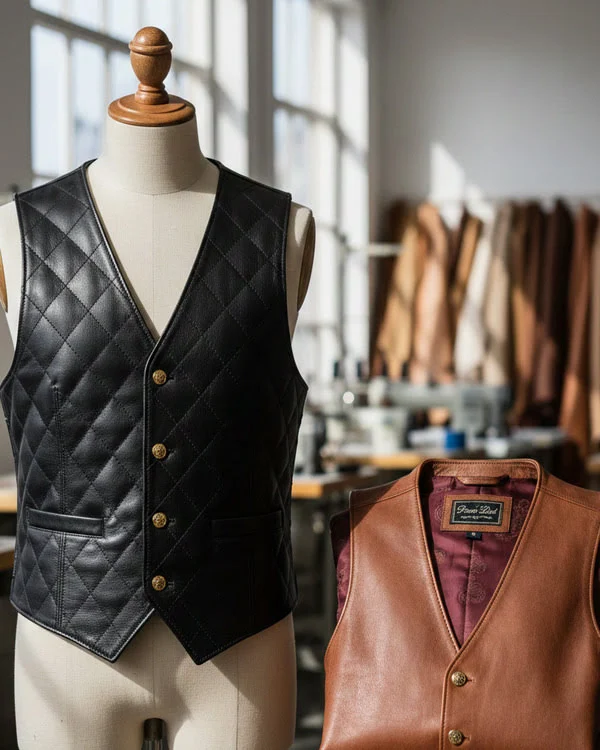
Leather selection should match the vest’s intended structure and appearance. A firmer material may help maintain a more defined outline, while a softer leather may create a more relaxed fall. Thickness and flexibility also affect how edges turn, how seams sit and how multiple layers behave around pockets and fastenings.
Panel arrangement matters when the design includes front and back sections, shaped side panels, shoulder overlays or decorative inserts. Cutting plans account for panel dimensions and natural variations in grain, texture, shade and usable surface area.
For buyers planning a commercial order, material consumption should be estimated from the actual pattern and selected leather. The number of panels, size range, pocket construction and natural variation in hides can influence cutting yield. A realistic estimate should be established against the proposed design rather than a generic allowance for all vest styles.
Edge Finishing and Seam Construction
Without sleeves or conventional jacket cuffs, many vest edges remain exposed or prominently finished. Armholes, necklines, front openings and lower hems therefore deserve particular attention during development.
Depending on the design, edge treatment may involve turned edges, binding, facing or another specified finish. The chosen method needs to suit the leather thickness and the intended appearance. In areas where several layers meet, excess bulk can affect both the look and the comfort of the garment.
Seam allowances, stitching placement and panel alignment should be defined according to the construction requirements. Where decorative stitching or contrasting seams form part of the design, their position and appearance should be included in the reference specification.
The final result reflects the approved design, with consistent finishing across corresponding edges and clean transitions at joining points.
Pockets, Closures and Branding Details
Pocket layout can be a defining feature of a leather vest, particularly in biker-inspired, western or utility-style designs. Placement should be coordinated with the body measurements, panel lines and intended proportions. Pocket openings, flaps, closures and bag dimensions may all need separate specifications.
Fastening components should be selected and positioned according to the design. Zipper length, snap placement, button spacing and front overlap should be checked against the finished pattern. Components also need to be compatible with the selected leather and the construction method.
For private-label orders, branding requirements may include woven or printed labels, embossed details, patches, branded hardware, hangtags and packaging. Artwork, dimensions, placement and attachment methods should be approved before production so that branding remains consistent with the buyer’s intended presentation.
Sample Development for Fit and Construction Approval
A physical sample helps buyers assess the vest’s proportions and finishing before a bulk order is confirmed. This is particularly useful for evaluating armhole shape, neckline position, front alignment and how the vest sits over the intended base layer.
A sample review may include:
- Shoulder width and overall body proportions.
- Chest, waist, hem and body-length measurements.
- Armhole depth, shape and movement.
- Neckline shape and front-opening alignment.
- Pocket dimensions and placement.
- Edge finishing, seams and visible stitching.
- Fastener operation and component finish.
- Leather appearance, labels and other specified details.
Buyer feedback should identify the relevant measurement or construction change wherever possible. If the leather, pattern or components change during development, the effects on fit, edge thickness, appearance and cost should be reviewed before final approval.
The approved sample and documented specifications should then serve as the reference for the intended production order.

Private Label and OEM Leather Vest Manufacturing
Vixen Leather works with buyers developing leather vests for their own brands and product collections, subject to the design and manufacturing requirements of each project. Buyers may provide a complete tech pack, an existing reference garment or a design concept requiring further specification.
For OEM and private-label work, it is important to agree on the technical details before bulk production. These can include material selection, pattern measurements, fastening arrangements, pocket construction, labels, branding and packaging.
Clear documentation helps align the approved design with the intended manufacturing process and gives both parties a common reference when reviewing samples, revisions and repeat orders.
Leather Vests Developed for Our Clients
Over the years, our factory has produced a wide range of leather vest collections for fashion brands, wholesalers, and private labels worldwide. From classic biker vests and casual leather vests to fashion-forward and insulated designs, our previous collections showcase the versatility, craftsmanship, and premium quality that clients can expect when partnering with us.


Grading and Fit Across Sizes
For brands ordering several sizes, grading needs to preserve the intended vest silhouette. Increasing body width alone may not maintain the correct relationship between the shoulders, armholes, neckline and front opening.
The grading plan should define the base size and the changes required at key measurement points. Depending on the design, this may include shoulder width, chest and waist dimensions, armhole depth, body length and hem width. Pocket positions and decorative details should also be reviewed to ensure they remain proportionate.
Buyers can supply their own measurement chart and grading rules, or discuss the required scope of development before sampling. The approved grading specification should make clear how each size is measured and what tolerances apply.
Production Standards for Wholesale Orders
Vest production depends on a shared understanding of what constitutes an acceptable finished garment. The production specification should identify the leather, lining where applicable, measurements, edge treatment, fastening components, pocket details, branding and packaging requirements.
Inspection criteria reflect the particular design. Checks may cover measurements, armhole and neckline symmetry where required, front-edge alignment, seam workmanship, pocket placement, fastening operation and visible surface condition. Acceptable natural variation in leather should be discussed before production rather than judged against an undefined expectation of uniformity.
For repeat orders, keeping the approved sample, material references, measurement chart and revision record helps maintain a consistent basis for subsequent manufacturing.
Costing and Manufacturing Information
The cost of a leather vest depends on its design and complete specification. Material consumption, leather type, panel complexity, edge finishing, pocket count, hardware, lining, branding and packaging can all influence the quotation.
To review a project, buyers should provide the available design references or technical pack, estimated order quantity, size breakdown, preferred leather and required components. Where a vest has multiple pockets, decorative panels or specialized edge treatments, close-up references can help clarify the construction and costing requirements.
Sampling charges, development revisions, production prices, lead times, payment terms and shipping arrangements should be confirmed in the project quotation. These details depend on the individual order and should not be assumed from a general product page.
Discuss Your Leather Vest Project
If you are sourcing a leather vest for a brand collection, wholesale programme or private-label range, share your design references and manufacturing requirements with Vixen Leather.
Include the vest style, intended fit, estimated quantity, size range, preferred leather, pocket configuration and branding requirements. These details provide a starting point for reviewing the specifications and identifying the next steps for sampling and production planning.
Contact Vixen Leather to discuss your leather vest development and manufacturing requirements.